Reaching 10,000 steps daily sounds simple until work, family responsibilities, and bad weather disrupt your routine. You might wonder, how many miles is 10,000 steps, and how can you reach that goal without spending hours outdoors? Understanding your daily walking distance helps you build a realistic fitness routine. Fortunately, you can make walking more convenient with simple habits and suitable equipment.
A walking pad offers a practical way to stay active while working or relaxing at home. Instead of waiting for perfect weather or finding time for outdoor walks, you can incorporate movement into your everyday schedule.
How Many Miles Is 10,000 Steps?
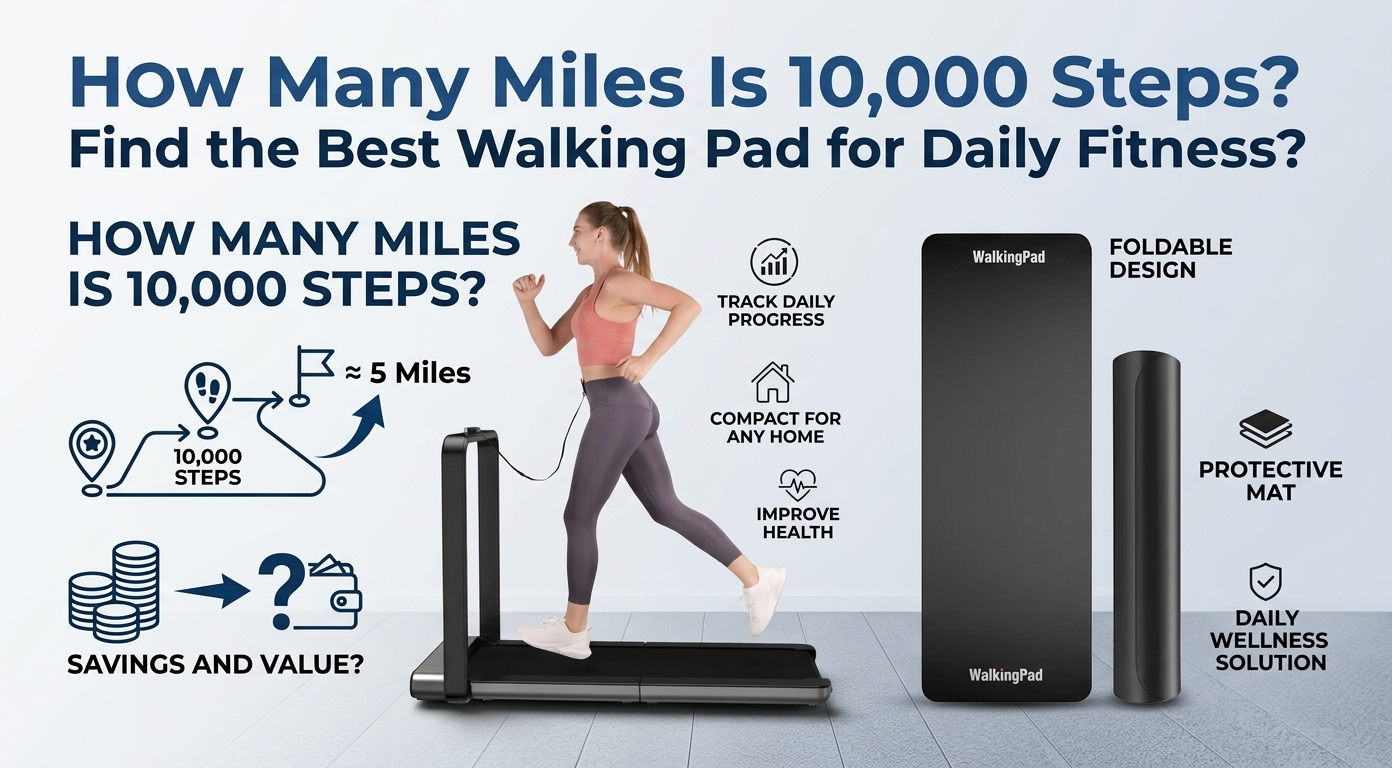
For most adults, 10,000 steps equal approximately 4 to 5 miles. However, your actual distance depends on your height, stride length, and walking pace. People with longer strides generally cover more ground with each step.
If you are researching how many miles is 10,000 steps, remember that this figure represents an estimate, not an exact measurement. Your fitness tracker or walking pad may provide a more personalized distance calculation.
How Many Miles Is 10k Steps for Different Stride Lengths?
Your stride length determines how far you travel with each step. Here is a simple comparison to help you understand the difference.
- Shorter stride: You might cover approximately 4 miles in 10,000 steps.
- Average stride: Your distance may reach around 4.5 miles.
- Longer stride: You could cover approximately 5 miles or slightly more.
These figures provide estimates rather than fixed measurements. Therefore, tracking your actual walking distance can help you understand your progress more accurately.
Why Reaching 10,000 Steps Every Day Can Be Difficult
Knowing how many miles is 10k steps can motivate you, but reaching that target consistently presents challenges. Modern routines often involve sitting for long periods, especially when you work remotely or spend hours studying.
Several common problems can prevent you from achieving your daily goal.
Busy Schedules and Limited Time
Many people struggle to schedule dedicated walking sessions around work and household responsibilities. Even with good intentions, unexpected tasks can interrupt your exercise plans.
Uncomfortable Weather Conditions
Rain, extreme temperatures, and dark evenings can make outdoor walking less appealing. Consequently, you might skip your planned walk and fall short of your daily step target.
Sedentary Work Habits
Office workers and remote professionals often spend most of their days sitting. Without regular movement breaks, accumulating enough steps becomes increasingly difficult.
Losing Motivation
Walking several miles can feel overwhelming when you approach it as one long workout. Setting smaller goals and tracking your progress can make the process more manageable.
What Affects Your Daily Walking Distance?
Although 10,000 steps provide a useful target, your total distance varies according to several factors.
- Height and stride length: Taller people often have longer strides, although individual walking styles also influence distance.
- Walking speed: Your pace affects how long you need to complete your steps. However, speed alone does not determine your total distance.
- Terrain: Hills, uneven paths, and other outdoor conditions can change your walking effort. Indoor walking offers a more controlled environment.
- Daily activity: Household chores, shopping, commuting, and workplace movement can all contribute to your overall step count.
Understanding these factors helps you set realistic expectations. Rather than worrying about an exact mileage figure, focus on consistent movement and gradual improvement.
Practical Ways to Reach 10,000 Steps Daily
You do not need to complete your entire walking goal in one session. Instead, divide your activity throughout the day to make it easier to maintain.
1. Break Your Goal Into Smaller Sessions
Start with manageable walking sessions instead of aiming for several miles immediately. For example, walk for 10 to 15 minutes in the morning, afternoon, and evening. These sessions can gradually increase your step count without requiring significant changes to your schedule.
2. Walk During Everyday Activities
Use phone calls, television breaks, and other free moments as opportunities to move. If you work from home, take short walking breaks between meetings. Small sessions add up over time. They also help interrupt prolonged sitting throughout your day.
3. Track Your Progress
A smartwatch, smartphone, or fitness tracker can help you monitor your steps and distance. Reviewing your results allows you to identify patterns and adjust your routine. For example, if you consistently finish the day at 7,000 steps, you can add another short walking session.
4. Choose Equipment That Fits Your Lifestyle
If outdoor walking does not suit your schedule, an indoor walking solution may help. A walking pad lets you walk at home without depending on weather or travel time. Look for a model with suitable speed settings, a stable walking surface, and dimensions that fit your available space.
Why the Best Walking Pad Can Make Daily Fitness Easier
Finding the best walking pad depends on your personal needs, available space, and fitness goals. For people who spend long hours at home, a walking pad can make regular movement more convenient.
Instead of reserving a separate hour for exercise, you can fit short walks into your existing routine. Depending on the model and your workspace, you may walk while watching television, listening to podcasts, or completing suitable desk tasks.
When comparing walking pads, consider these important features:
- Compact design: A space-saving model can suit smaller homes and apartments.
- Adjustable speed: Different speed settings help accommodate gentle walks and faster sessions.
- Comfortable walking surface: A suitable belt and stable construction support a more comfortable experience.
- Convenient controls: Simple controls make it easier to adjust your workout.
- Storage options: Some models offer designs that make storage easier when you are not using the equipment.
The best walking pad should fit your routine rather than force you to change your entire lifestyle.
Is WalkingPad Worth Considering?
WalkingPad is a brand worth exploring if you want a convenient indoor walking solution. Depending on the model, its range may suit people looking for space-conscious equipment for home use.
Before choosing a WalkingPad model, compare its dimensions, speed range, weight capacity, noise information, warranty, and available safety features. Check the specifications carefully to ensure the equipment matches your needs.
A suitable walking pad can remove several common barriers to daily movement. However, your results will still depend on regular use and realistic fitness goals.
Benefits of Using a Walking Pad for Daily Steps
A walking pad can offer several practical advantages when you want to increase your daily activity.
- Greater convenience: Walk at home without planning an outdoor route or travelling to a gym.
- Flexible scheduling: Add short sessions between work tasks, household activities, or entertainment.
- Consistent movement: Maintain an indoor routine when outdoor conditions become inconvenient.
- Progress tracking: Combine the equipment with a compatible fitness tracker to monitor your steps and distance.
- Gradual fitness improvement: Build a sustainable habit by increasing your activity according to your current ability.
Remember that 10,000 steps are not a universal requirement for good health. Your appropriate activity target depends on your current fitness, health, and circumstances. Start comfortably and increase your walking gradually.
Conclusion
Understanding how many miles is 10,000 steps helps you turn a popular fitness goal into a practical daily routine. For most adults, that target represents approximately 4 to 5 miles, depending on stride length. You can reach your goal by breaking walks into smaller sessions, tracking progress, and finding opportunities to move throughout the day. If outdoor walking feels inconvenient, the best walking pad may help you stay active at home.
Explore WalkingPad models that suit your space, budget, and fitness needs. With a comfortable setup and consistent habits, you can make daily walking a more manageable part of your lifestyle.